Faith, Risk and AIDiscerning Leadership in a Disruptive Era
AI is further ahead than most leaders realise. The questions it raises are older than we think.
Come and grapple with them.
A talk on what AI can now do and the issues it raises, then a conversation among leaders on how to respond.
Bring your questions. Leave with sharper ones.
For leaders who know their theology, and know the technology is moving faster than they can follow.
You lead, preach, advise or build. You have thought hard about power, work and what it means to be human. What is harder to see from the outside is how far AI has already come, and how quickly.
Systems now research, write, reason and act for hours with little supervision. The values inside them are being set by a small number of companies, and the decisions are being made now.
Most public commentary swings between hype and alarm. This conversation looks to be neither. It is a clear look at where things stand, and a serious conversation about what faithful leadership asks of us.
Every generation seems to want a tower. The question is what we build.
Pope Leo XIV opened his first encyclical with a choice: build a new Tower of Babel, or a city where God and humanity dwell together.
Why Babel is a curious story for now.
“Humanity, created by God in all its grandeur, is today facing a pivotal choice: either to construct a new Tower of Babel or to build the city in which God and humanity dwell together.”
AI is not being built in a vacuum. Nations treat it as a race for economic, military and political advantage, and a handful of companies sit at the centre of it. That is why the old story may fit: a people pooling their power to build something that would make a name for themselves.
On 25 May 2026, Pope Leo XIV released his first encyclical, Magnifica Humanitas: On Safeguarding the Human Person in the Time of Artificial Intelligence. It opens with that choice between Babel and Jerusalem, warns against AI being concentrated in the hands of the few, and says plainly: “Artificial intelligence needs to be disarmed.”
The launch told its own story. Beside the Pope sat Chris Olah, a co-founder of Anthropic, the company behind Claude. Anthropic was valued at $965 billion in May, and in October it filed to go public, with reports of a valuation of up to $2 trillion, which would be bigger than SpaceX’s record listing. In the same room sat Father Paolo Benanti, a Franciscan friar who has taken a vow of poverty and is the Vatican’s leading voice on AI.
Some of the people building it admit it is hard to steer. Olah told the Vatican his company works “inside a set of incentives and constraints that can sometimes conflict with doing the right thing.” The risks are vast, and there is a growing sense that it is all a little out of control.
The values many of us grew up with, and have tried to see forged into our character, are increasingly welcome and needed in this time of uncertainty. And some things we can be certain of: the nature and character of God, the significance and impact of Jesus, and our part in transforming society. This hour starts there, with curiosity rather than easy answers.
Sources: Deadline, May 2026 · OSV News · National Catholic Reporter · Futurism · Axios, October 2026 · US News · Paolo Benanti
Five fault lines.
Power. Work. Identity. Connection. Thinking. AI is reshaping each one, and each touches questions the church has wrestled with for centuries.
The technology is moving faster than the conversation.
In a short time, AI has gone from answering questions to carrying out work. Much of the public conversation has not caught up, and too little of it draws on the wisdom of faith.
This hour is a chance to slow down, take stock of where things are, and think together about what it asks of us.
Sources: Gartner, June 2025 · Forrester, Predictions 2026 · Forrester 2026 B2C predictions
These are not only technical questions.
Some of the most influential voices in technology say there is no plan for the turbulent years ahead. AI leaders have warned it could threaten humanity itself. Pope Leo XIV says it must serve people, not the powerful few.
Who sets the values inside systems billions of people now consult?
When a handful of companies hold this much power, what does faithful participation look like?
If machines can do the work that gave people purpose, where does dignity rest?
How do we use it intelligently, without handing over our judgement?
What about the environment, and who pays the cost?
What happens to formation when every answer is instant?
Is “we have to move faster” a reason, or an excuse?
Where is the church’s voice while the foundations are being laid?
What does loving our neighbour look like when AI shapes their work, news and choices?
A talk to raise the issues, a conversation to grapple with the points.
A brief look at what AI can do today, and where it is heading.
Power, work, dignity, truth and the environment.
Scripture and the long tradition of the church, from Babel to Nehemiah.
As leaders, churches and organisations, together.
A free gift with your seat.
On the day, you will be given a free gift.
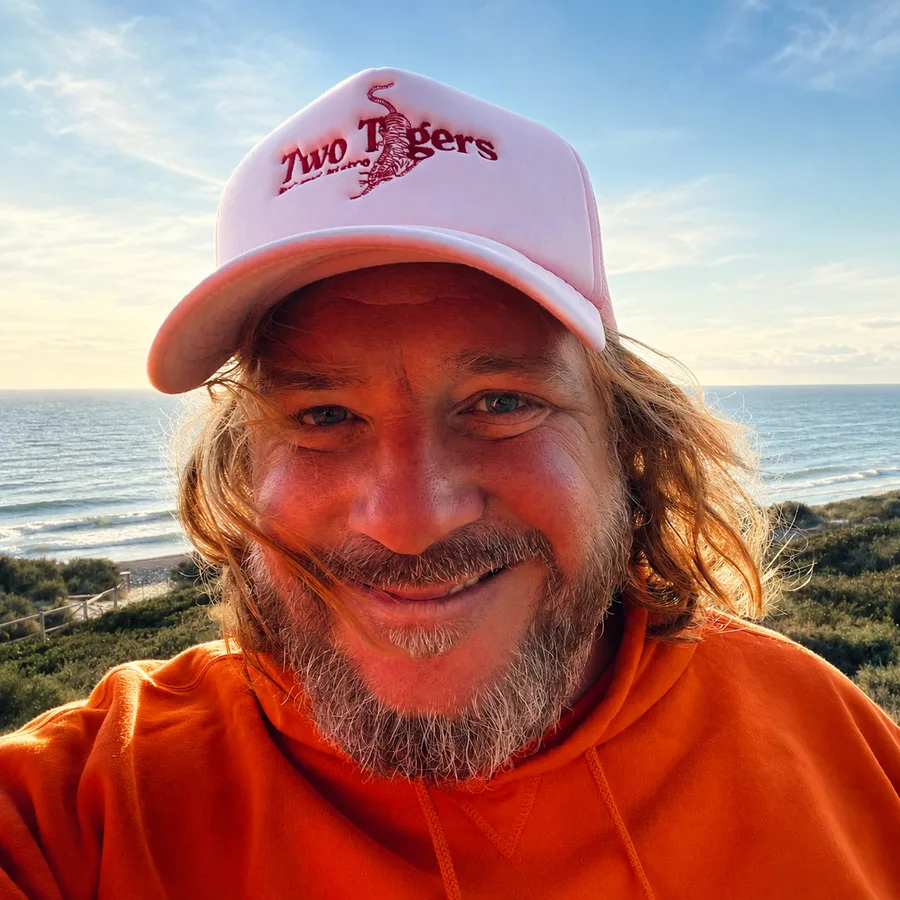
Caleb Storkey
AI strategist, author and hostI help leaders put AI to work, and I build and run AI systems in my own business. Over ten years ago I co-wrote Futureproof, about the disruption that has now arrived.
In my Christian faith and desire to see society possibly transformed, I believe in a triple bottom line of people, planet, profit. But more than that, I believe that God takes an active interest in human dignity and seeing people become all they are created to be. The more I work with AI, the more convinced I am that the technical questions are the easier ones.
I will give a short introduction to some of these themes and the bigger questions, then open the floor. I expect to learn as much as I share.
The technical questions are the easier ones.
Some questions are better worked through together.
Come and add your voice to the conversation.
Save my seatFriday 20 November · 17:00 to 18:00 GMT (UK) · 12:00pm to 1:00pm ET (US) · Free · Live on Zoom